Mechanical design · Tooling
Custom industrial tooling
Jigs, clamping fixtures, load-transfer tooling, assembly aids, inspection and gripping tooling: our mechanical design office designs, calculates, manufactures and commissions tooling built around your product, your throughput and the safety of your operators.
What is custom industrial tooling?
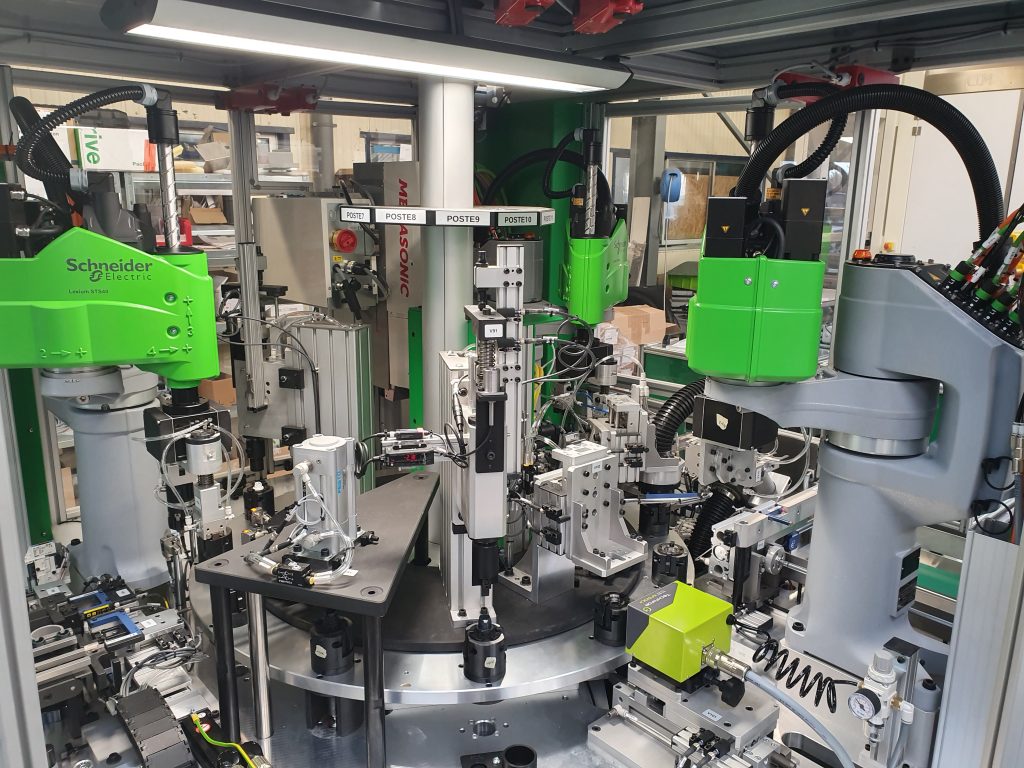
Industrial tooling is equipment designed to make a production operation easier, safer or more reliable. Unlike off-the-shelf standard tooling, custom tooling is sized exactly for your part, your process and your workstation: it eliminates adjustments, adapters and compromises, and turns a slow, strenuous or risky motion into a smooth, repeatable operation.
Our mechanical design office, located north of Nantes, covers the entire cycle: functional analysis, 3D CAD design in SolidWorks or Inventor, strength-of-materials calculations, manufacturing, assembly and fine-tuning in our workshops. The tooling fits a manual workstation just as well as an automated line or a robotic cell.
Our tooling specialties
Load transfer
Tilters, carts, lifting beams, lift tables and transfer tables to move heavy parts effortlessly and without risk of musculoskeletal disorders.
Assembly aids
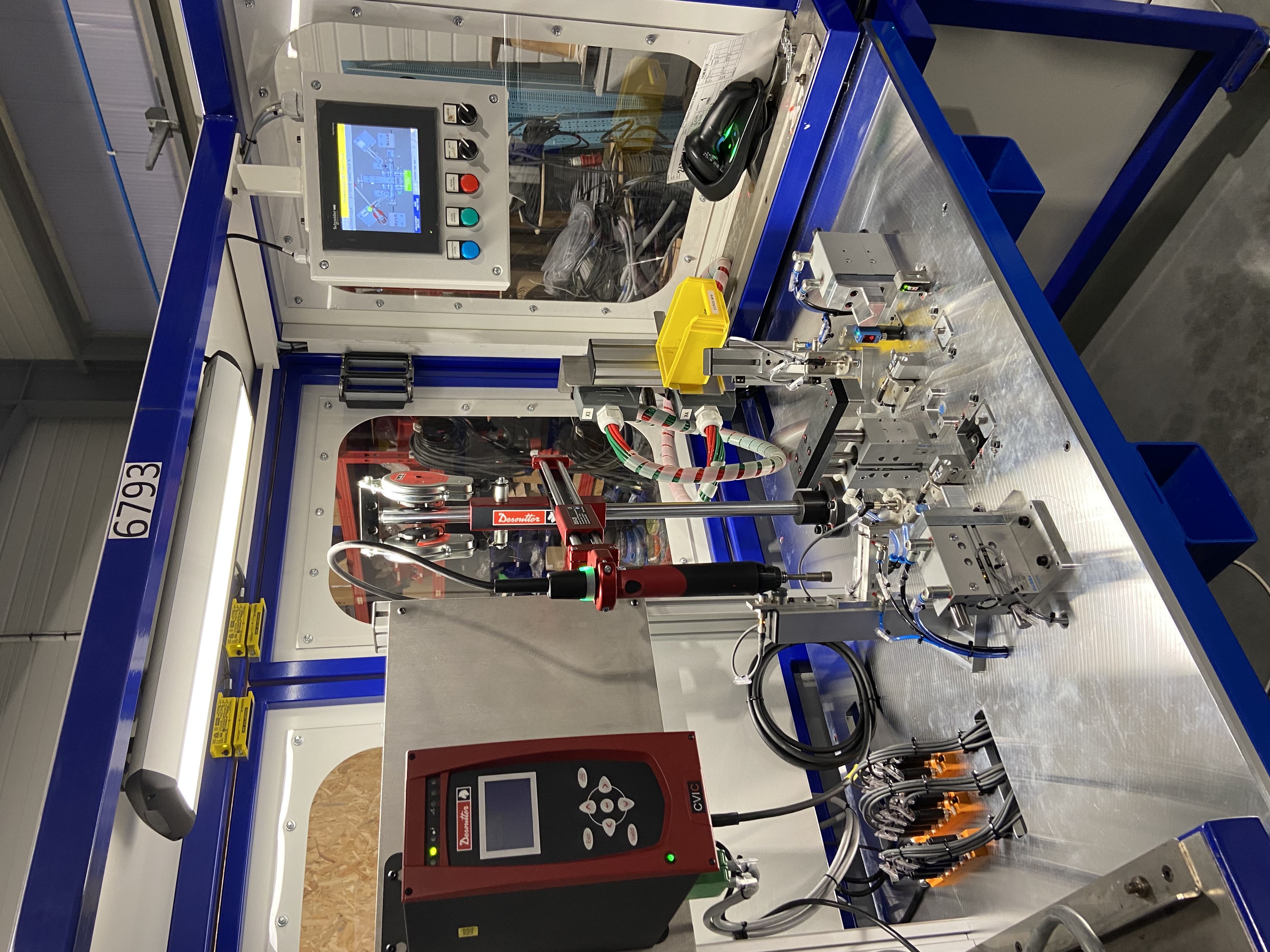
Screwdriving guides, torque-reaction supports, and press-fit, clipping, riveting and fitting-assembly tooling.
Positioning and clamping
Jigs, centering pins, pneumatic clamps and part-carrier pallets to enforce the correct position, to within a few hundredths of a millimeter.
Inspection and verification
Dimensional gauges, geometric templates, functional test benches and poka-yoke keying devices to detect non-conformities at the workstation.
Handling and gripping
Mechanical, vacuum or magnetic grippers, balanced arms and contoured cradles to handle fragile or heavy parts.
Ergonomics and MSD reduction
Height-adjustable workstations, self-retracting tool supports and part-feeding devices to protect your operators.
Designed, calculated, manufactured and fine-tuned
Every tool is developed for your throughput, ergonomic, repeatability and safety requirements. We verify loaded parts through calculation and select the materials and components suited to the application.
- Steel and stainless steel for load-bearing structures and harsh or food-processing environments
- Aluminum and modular profiles (Item, Bosch Rexroth) for handled and reconfigurable tooling
- Engineering plastics (Nylon, Delrin, PEEK) in contact with finished surfaces
- Festo, SMC or Parker pneumatics for clamps, power-assisted tilters and grippers
- INA and SKF linear guides and bearings for precision motion
The challenges tooling addresses
| Challenge | What the tooling brings |
|---|---|
| Productivity and throughput | No more searching or adjusting motions, with parts presented within easy reach |
| Quality and repeatability | Position enforced mechanically, independent of the operator and their fatigue |
| Safety and MSDs | Manual handling causes nearly 30% of workplace accidents; tooling removes the risk at the source (ISO 11228) |
| Flexibility | Interchangeable components and quick adjustments: changeover in under 10 minutes (SMED) |
| Automated line | End-effector grippers, conveyor pallets and quick-change tooling |
Our design process
- 01
Functional analysis
Study of the part, the process and the ergonomic constraints. We visit your site to observe the workstation under real conditions.
- 02
Preliminary design
One to three technical concepts, compared on cost, lead time and maintainability, then validated together.
- 03
Design and calculation
3D modeling in SolidWorks, detail drawings, bills of materials and strength-of-materials verification of loaded parts.
- 04
Manufacturing and commissioning
Machined or welded-fabricated parts, assembly and testing in our workshops, on-site installation and operator training.
Tooling for every industry
Our tooling equips production lines in the automotive industry and its suppliers, plastic injection molding (mold transfer tables, degating), food processing and packaging (washable stainless-steel tooling), electronics and subcontracting, medical and pharmaceutical (cleanroom tooling), energy and heavy mechanical engineering, as well as aerospace (assembly and riveting jigs). Lifting and handling tooling is designed in accordance with the applicable standards, in particular EN 13155 and the Machinery Directive.
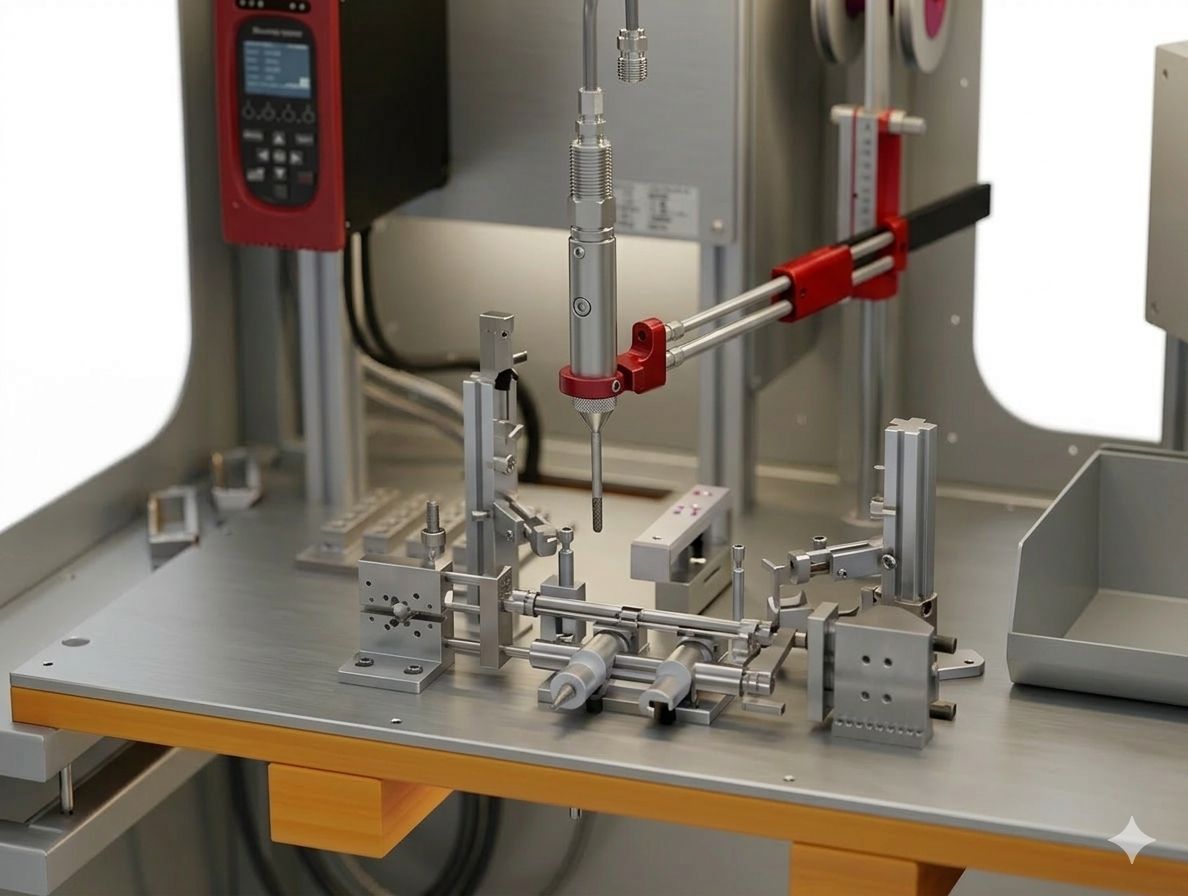
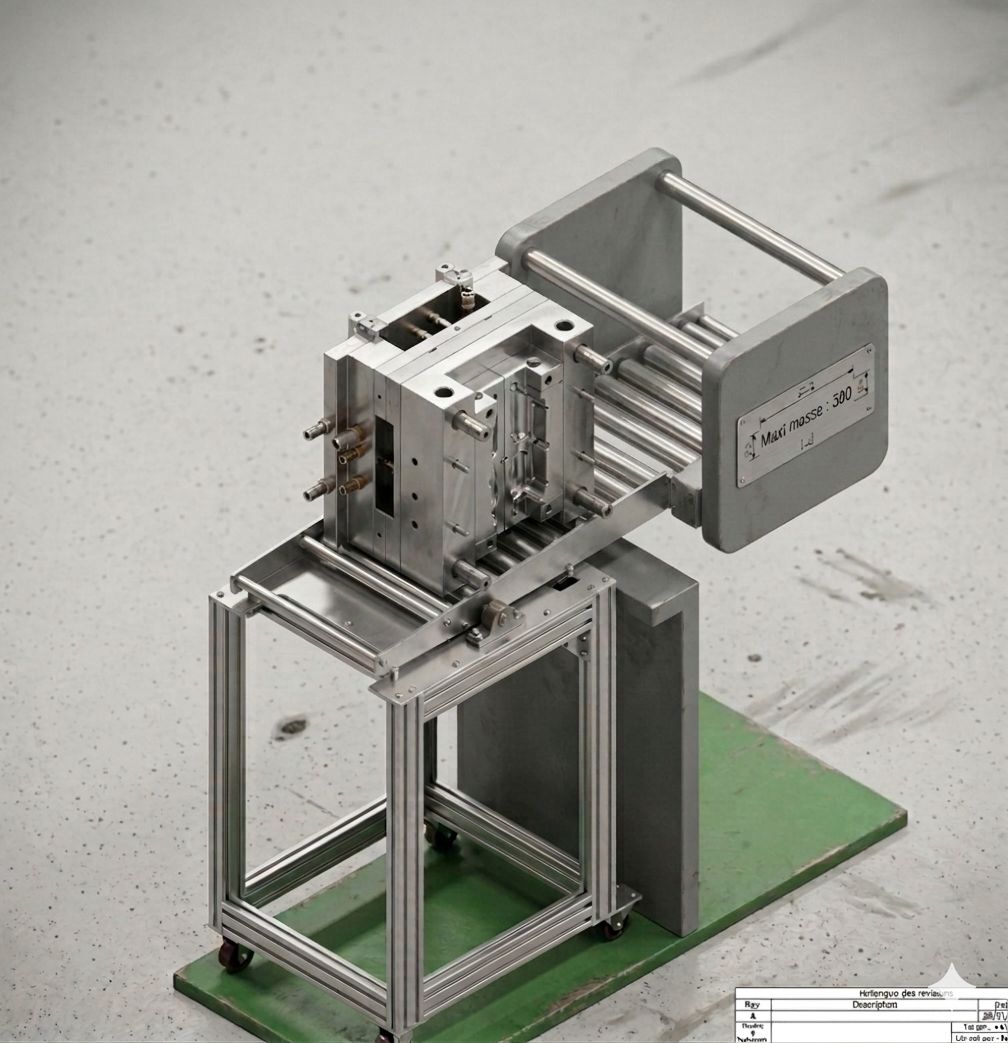
Our tooling in pictures
Frequently asked questions
What is the difference between standard tooling and custom tooling?
Standard tooling is designed for generic applications and often requires adaptations or compromises. Custom tooling is sized precisely for your part, your throughput, your workstation and your ergonomic constraints. It eliminates adjustments and adapters, which translates into better productivity, more consistent quality and a longer service life.
What is a poka-yoke and how do you build it into a tool?
A poka-yoke (“mistake-proofing” in Japanese) makes incorrect assembly of a part physically impossible: an asymmetric centering pin that accepts the part only in the correct orientation, a stop that blocks travel if the part is missing, a presence sensor that prevents the cycle. We systematically build these mechanisms into our assembly tooling.
How do you design load-transfer tooling?
We first analyze the part (weight, geometry, fragility, gripping points) and the process (distance, frequency, space), then we choose the right principle (cart, tilter, manipulator arm, lifting beam), size it through strength-of-materials calculation and model it in 3D. Lifting and handling tooling is designed in accordance with the applicable standards, including EN 13155 and the Machinery Directive.
Can you design tooling suited to several product references?
Yes. We design modular tooling with interchangeable components (jaws, pins, supports) covering several references on a single frame. In SMED designs, reconfiguration is done without tools in under 10 minutes, which pays back the investment and improves line flexibility.
What budget should I plan for custom tooling?
Each tool is quoted individually according to its complexity, from a simple positioning jig to a pneumatic tilter or a motorized transfer table. The return on investment is generally fast: on a high-throughput workstation, a cycle-time saving often pays back the tooling within a few weeks or months.
Do you work outside Nantes and the Pays de la Loire region?
Yes. Our design office is located north of Nantes, but we work throughout France. Design is largely carried out remotely (CAD file exchanges, video conferences) and we travel on-site for workstation analysis and installation.
A workstation to tool up?
Describe the operation, the part and the throughput: we will propose a preliminary tooling design, even from an incomplete set of specifications.
Send us your specifications
